
Birds, land animals prepping for winter

Scot Stewart
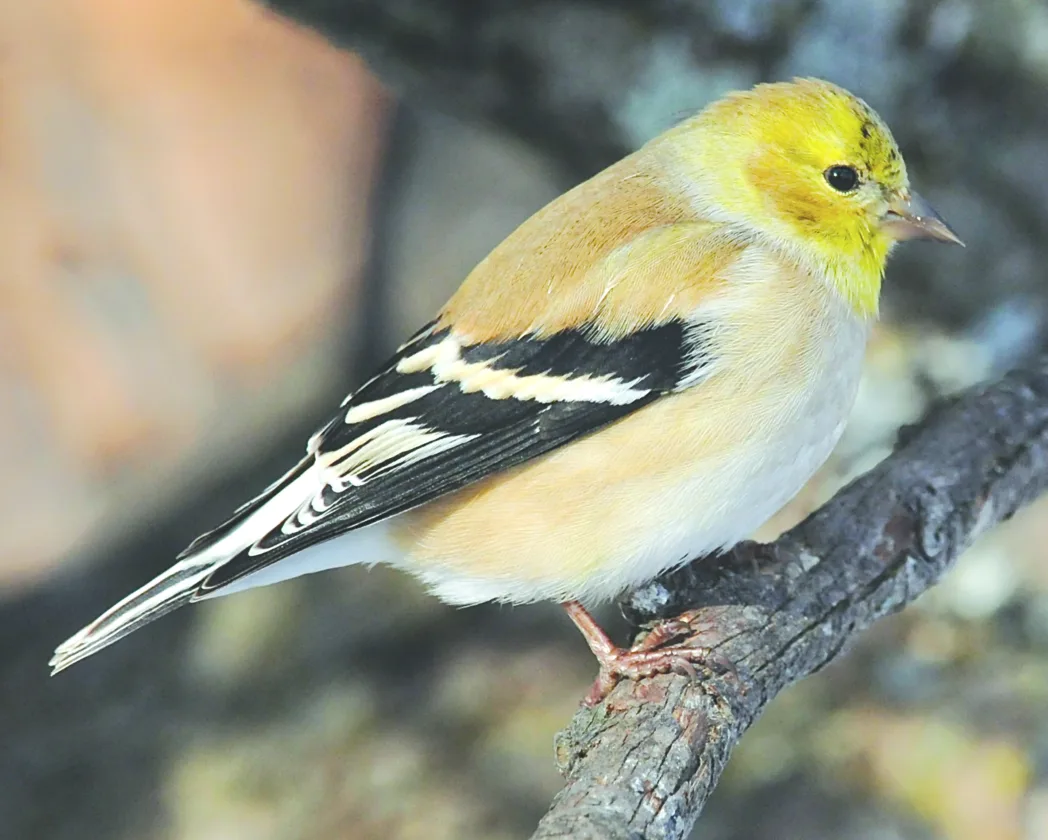
More than 10,000 American goldfinches like this one were seen over a one-week period at Whitefish Point in Chippewa County recently. (Photo courtesy Scot Stewart)
Scot Stewart
More than 10,000 American goldfinches like this one were seen over a one-week period at Whitefish Point in Chippewa County recently. (Photo courtesy Scot Stewart)
Trending
November's first week has been quite idyllic with extremely mild temperatures and even a bit more welcome rain. The rain has been truly needed to help with the ongoing wildfire battles and preparing plants for the winter and next year.
November has been the time when animals like chipmunks are heading underground for the winter, while squirrels and beavers are finishing up stocking for the winter. Bird migration should just about be done for almost all of the fall migrants.
This week, the chipmunks were still busy running around in the warm wet leaves, squirrels were still out sorting through the morass of acorns from another record season, and the busy beavers are still cutting down trees, especially along the Tourist Park trail in Marquette and taking snacks back to their lodge browse piles for the winter.
For bird migration, though, it was another matter -- especially at Whitefish Point in Chippewa County. The 10 days between Oct. 26 and Nov. 4 saw a mind-boggling number of migrants stream past the point.
During that time, 1,001 snow buntings, 2,274 red crossbills, 7,596 pine siskins and a whopping 11,384 American goldfinches were tallied by the waterfowl counter at the tip of the point. Nov. 1 was probably the biggest day, with 3,715 siskins and 8,079 goldfinches.
The huge numbers may be due, at least in part this fall, to the continued changes in the western environment due to drought and wildfires this past summer. Observers have noted a wide range of birds moving from the Rockies due to the lack of food available to many bird species.
An uptick in goldfinches has been noted at a number of bird feeders in Marquette recently, and small flocks of snow buntings have popped up at many open areas. One flock of 85 snow buntings was noted early this week along Lakeshore Boulevard near Wright Street.
As is so often the case, there have been plenty of other great birds to keep things lively at Whitefish. Black-legged kittiwakes, a type of gull, short-eared owls, blue-gray gnatcatchers and a Townsend's solitaire have all added to the diversity seen earlier this week there. The first two are most likely migrants, the latter two vagrants either off course or winter wanderers.
There have also been a number of short-eared owl sightings in the Marquette area this fall, too. Several times they have been seen at South Beach and once further east along the lake toward Sand Point.
Short-eared owls prefer open areas and are most often seen in fields and agricultural areas. They are most frequently seen at dusk and dawn perching on fence posts or gliding slowly just a few feet off the ground looking for small mammals and birds. Only a few nest in the Upper Peninsula but occasionally are noted migrating through the area, mostly in the eastern U.P. in the spring and fall.
Red-breasted mergansers are really the only other bird with triple-digit numbers there this past week. Just a few other ducks, mergansers, scoters and long-tailed ducks, all divers, are left. In many other U.P. locations, diving ducks make up the majority of waterfowl seen, along with a few horned and red-necked grebes. In Marquette, all three mergansers, common goldeneyes, buffleheads, and a number of long-tailed ducks have been seen in the Lower Harbor, along with resident mallards, and all but the long-tails have been foraging in the Dead River through to Tourist Park, too.
The long-tailed ducks are some of the most entertaining diving ducks to watch. One of the best places to watch them is from the Lower Harbor breakwall. They often forage in groups, sometimes up to 20 or so. One recent group of five slowly worked into the Coast Guard's corner of the harbor fairly close to the wall.
They frequently all dive within seconds of each other and can disappear for up to 45 seconds. Long-tails can dive up to 200 feet down and are the diving ducks able to dive the deepest. They usually bob to the surface a couple of seconds apart, rest a minute and head back down again. Their synchronized approach, their small heads and size make them fairly easy to identify.
Swans continue to pop up at a variety of places, too. Two tundra swans were seen over Saunders Point in Escanaba on Monday. They are headed to the Atlantic Ocean and will winter in and near Chesapeake Bay. The number of trumpeter swans on the Dead River in Marquette increased last weekend from three up to nine.
As the temperatures drop this month and next, many of the local trumpeter swans will head south, but some will continue to spend time in the area in a variety of places. Some dip in and out of the Dead River most winters but don't really ever stay too long at any one time. They also head to Trout Lake in Alger County near Limestone and down to the Manistique area on the river in town. All three of these sites have some corn, other grains and seeds provided for them to ease the search for food.
With some signs of winter beginning to appear both wildlife and humans will begin making the changes necessary to adapt. The mild conditions look to continue in a lower key way, though, for awhile. It may look a little different, too, with some furry neighbors still running around instead of tucking themselves in to begin hibernating, and others still enjoying the beauty of the U.P., instead of heading south to snow-free lands.
All seem to be enjoying the calm!