Health Matters
Medicine through the ages
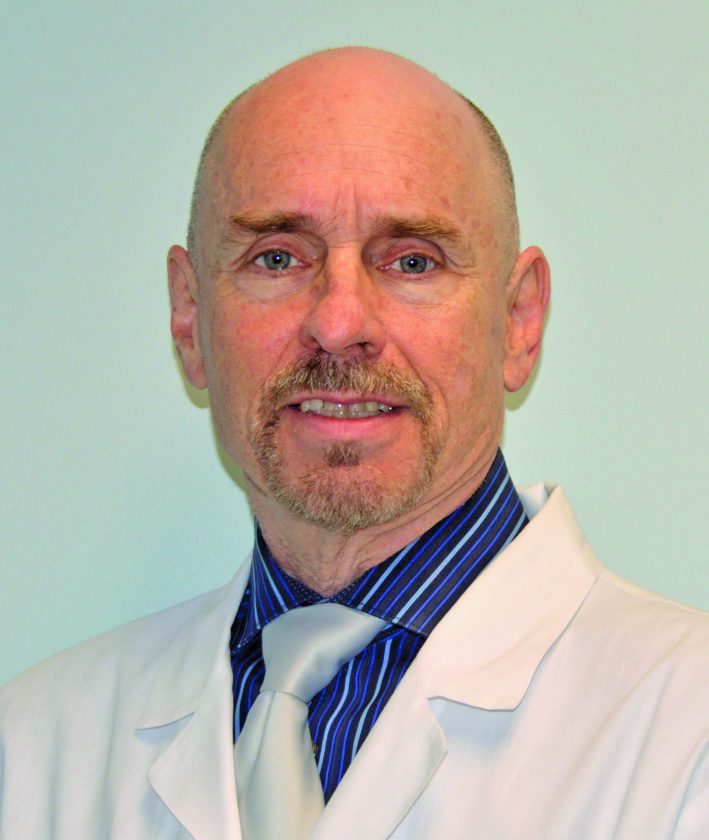
Conway McLean, DPM, Journal columnist
Our healthcare system has many failures and inadequacies, and consequently many complaints. Arguments for the benefits of one healthcare system over another continue to rage, with nationalistic tendencies dominating one’s perspective. The United States, despite having the highest per capita expenditures for healthcare in the world (by a large margin), also has some of the worst outcomes according to many measures. The conclusion reached by many policy experts is that our system has failed to provide adequate basic medical care for millions of Americans, be they man, woman, or child.
But take a step back. From a historical perspective, the progress in our ability to care for nearly all medical conditions has improved unbelievably. Our understanding of disease is so much greater. This is part of the reason therapies of old were sometimes beyond barbaric. Frequently, they were indeed medieval, practiced in the dark ages, a time of great ignorance and superstition.
Religion provided much of the information regarding the universe and our place in it. Consequently, it was a major player in the “healthcare market.” Prayer was believed to be the optimal therapy for nearly all sickness and disease. Additionally, many monks became the providers of numerous herbal remedies, a phenomenon noted in many parts of the world. This dual therapy approach was especially relevant since much of human illness was deemed to be the work of demons and spirits.
Ancient cultures each had their own medical practices, some surprisingly advanced. Maggots used to be applied to a festering or diseased wound since these little scavengers eat dead, bad tissue and leave the viable, healthy material alone. Surprisingly, this technique is in use today. Also still utilized is honey for non-healing wounds, again, part of medical care in the medieval era. As is now well-recognized, it has a long history of use world-wide in wound care.
Folk medicine was the predominant style for thousands of years, using various herbs and potions to treat illness, all the way back to prehistoric times. Various incarnations of this approach remain an integral component of healthcare in many parts of the world. But more serious disease was treated differently in the Dark Ages (considered to run between 500 AD and 1500 AD). These were considered of supernatural origin, likely the result of some spell cast against the individual, or the visitation of some demon.
There was a time in human history when medicinal potions often contained human tissue, a practice referred to as “corpse medicine.” This was a common approach for hundreds of years, utilizing human flesh, blood, or bone from a deceased person, providing the elixir with magical properties for treating the living. By consuming the remains of a deceased person, the patient also ingested part of their spirit, supposedly leading to increased vitality.
Another technique of some renown is the practice of bloodletting, whereby some ailing individual is drained of this vital substance. This method was considered beneficial for everything, from a sore throat to the plague. The first surgeons were barbers, listing the availability of this practice next to haircuts and shaves. It was based on the concept that sickness of nearly any sort was the product of some “bad blood,” its use going back to the ancient Sumerians.
Egyptian culture developed an effective and well-organized system of medicine. It evolved to the point of having specialists, physicians treating one specific sort of problem. They used willow bark, which contains a natural form of aspirin, to treat aches and pains. They performed physical therapy for injuries and splinting of fractures. Their knowledge of medicinal herbs was advanced, and many of those utilized in Egyptian medicine have been shown to have positive effects on numerous conditions. They were proficient in wound care, knowing good suture technique and appropriate methods of healing (like honey for wounds). Egyptian physician-priests used moldy bread as an antibiotic, thousands of years before the discovery of penicillin.
Surgery has been performed by various cultures for thousands of years. Some examples would include amputations, dental extractions, cauterizations of wounds, and the favorite of many, trepanning. In this lovely procedure, a hole was drilled into the skull, the goal being to relieve pressure. When there is swelling or bleeding around or in the brain, such an effort is an effective treatment. Unfortunately, this was rarely the case, and the surgery was usually performed for inappropriate reasons or performed inappropriately.
Some of the most famous physicians in history were Greek. Although perhaps not as skilled as the Egyptians, they made some important advances, some of which were primarily philosophical. The concept of a physician first and foremost “doing no harm” was the oath sworn by Hippocrates, one that has been handed down over the ages. Perhaps his most impactful contribution was his separation of medicine from the religious, the divine.
Grecian physicians expounded upon the importance of the case history, developing an understanding of the affliction by obtaining information from the patient. This interaction between a doctor and the patient has been foundational in the development of 21st century medicine. Greek surgeons developed instruments that, for all intent, are still in use today, including the scalpel and the forceps. Greek physicians even created an instrument akin to a syringe.
Although not unique to the Romans, they too understood the value of a professional soldier; these individuals were expensive investments. As such, they needed to be cared for. Military surgeons developed excellent skills in caring for the wounds of war. Their prowess resulted in a very high survival rate of Roman soldiers. This was also partly due to the Roman’s understanding of the role of poor hygiene in spreading disease. In an effort to improve sanitation, they created aqueducts to supply clean water to the inhabitants of their cities and sewage systems for waste.
We’ve come a long way from the days of “take two leeches and call me in the morning.” (So now your PCP’s nurse tells you to take two cups of willow bark and call back in the morning?) Although there is desperation in the future for infectious disease, and no significant developments have been made in pain control in years, it should be clear: the years have brought us a vast sum of information about physiology and the human body, health, and disease, knowledge completely unimaginable a few short years ago. Regardless of the appropriateness of the way in which it is utilized, it’s a grand achievement.
EDITORS NOTE: Dr. Conway McLean is a podiatric physician now practicing foot and ankle medicine in the Upper Peninsula, having assumed the practice of Dr. Ken Tabor. McLean has lectured internationally on surgery and wound care, and is board certified in both, with a sub-specialty in foot orthotic therapy. Dr. McLean welcomes questions, comments and suggestions at drcmclean@penmed.com.
Tuesday: Health
Talk With the Doc: Volleyball history and fun facts
Talk with the Doc

Remember to give thanks to yourself during the holidays and beyond
Talk With the Doc: We all live by choice, not by chance
New FDA-approved glasses can slow nearsightedness in kids