
Fuel for the future
Proper nutrition is critical for older adults
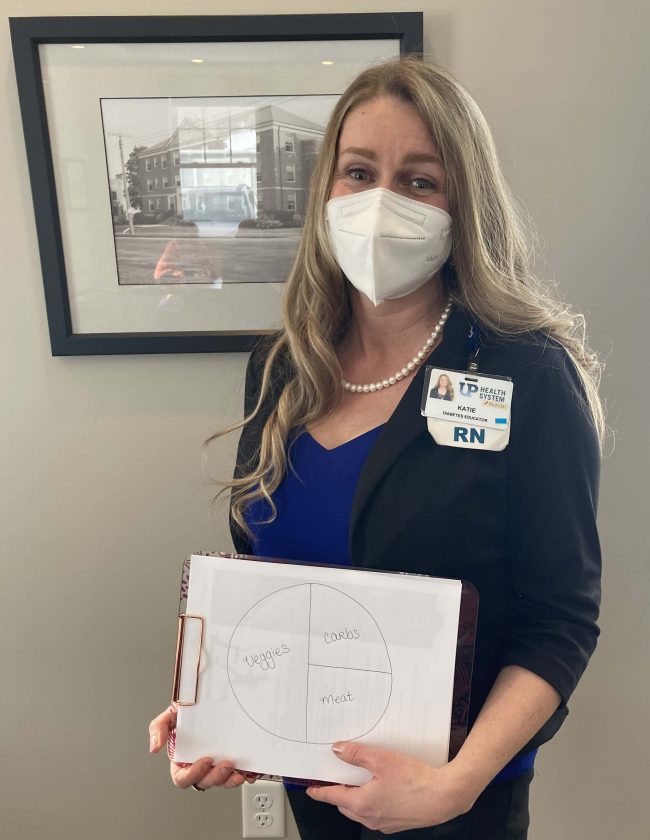
Registered nurse and diabetes educator Katie Helppi shows a plate chart for healthy eating. For a healthy meal, half of the plate should contain vegetables, 1/4 of the plate should contain carbs, and the other 1/4 should contain meats. (Journal photo by Taylor Johnson)
MARQUETTE — Have you ever felt sluggish after eating a big Thanksgiving Day meal? Or have you ever had more energy than before thanks to a big cup of coffee? The way we fuel our bodies impacts how we function. We should all be mindful of what we’re putting in our bodies, but this is especially true for older adults.
“As we age, our appetites change. Many seniors lose their appetite for eating or it becomes difficult to access and prepare food. It is so important to make sure we are eating a diet that is rich in the nutrients our bodies need,” Community Nutrition Services Director for Community Action Alger Marquette Lori Stephens-Brown said.
So what does a healthy diet look like? It may differ slightly from person to person, but registered nurse and diabetes educator Katie Helppi shared a chart that helps people visualize what a healthy dinner plate should look like.
In a presentation at the Mill Creek community room sponsored by Lake Superior Life Care and Hospice on Feb. 17, Helppi drew a 9-inch dinner plate and divided it into sections. First, she started with vegetables. Half of the dinner plate should contain veggies.
“Canned vegetables are fine. The concern with canned vegetables of course is the salt, so if you can drain the water out of them and rinse them, that takes a lot of the salt out of it,” Helppi said. “Frozen are good too.”
Next, she drew a line showing that one quarter of the plate should contain some type of meat. There are many options for meats, such as such as beef, chicken, fish, or meat alternatives like tofu and beans.
“Beans do have carbohydrates. I’m talking about garbanzo, kidney, black beans, they have carbohydrates but they have so much fiber, they’re really a good option,” Helppi said. “On occasion, having beans in place of your meat is a wonderful option.”
The last quarter of the plate should contain carbohydrates, such as potatoes, breads, noodles or rice. While white bread and rice are delicious, whole grain options are better for your body.
“Whole grain breads are going to have a lot less impact on your blood sugar, you’re going to see a lot better blood sugar control and a lot shorter action for that to stay in your system and cause that havoc with your blood sugar,” Helppi said.
However, some may find it hard to afford healthy foods.
“Food has increased in cost, and decreased in quality,” Helppi said. But fret not, there are options for those who need assistance in purchasing food. Community Action Alger Marquette is a local example of one of those options.
“Right here at CAAM we offer the Commodities Supplemental Food Program that provides a monthly box of healthy foods for lower income seniors. We also offer Meals on Wheels for homebound seniors and also congregate dining for any seniors – seniors and their spouses can dine at our meal sites for a donation,” Stephens-Brown said. “The congregate meal sites offer the senior a nutritious hot meal, plus the opportunity to socialize. Since we are in a pandemic, we also offer seniors the option to pick up a meal to take home from our sites.”
The National Institute on Aging website also has a few tips to cut down on your grocery bill.
They include: asking your local grocery stores if they offer senior discounts, using coupons when you can, and considering buying store brand items instead of name brand items, as store brand usually cost less. Sticking to a shopping list can also help keep your grocery budget in check.
Staying hydrated is also key to successfully fueling your body.
“Proper hydration is often overlooked in the elderly. It is so important for seniors to get enough water each day. Hydration and proper nutrition play a role in keeping seniors from being hospitalized,” Stephens-Brown said.
The National Institute on Aging website recommends the following tips for getting enough fluids:
≤ don’t wait until you feel thirsty to drink water or other fluids;
≤ take sips of water, milk, or juice between bites during meals;
≤ add liquids throughout the day;
≤ drink a full glass of water when you take a pill and;
≤ if you drink alcoholic beverages do so sensibly and in moderation.
We only have one body in this lifetime, so we should be treating it the best we can. Being conscious of what we eat now will only help our bodies in the future.
“Are we fueling our cells just to get us through the day? Or are we fueling ourselves so that our cells are really getting what they need and keeping them the healthiest they possibly can, as far into the distance in the future as we can imagine?” Helppi asks.
Taylor Johnson can be reached at 906-228-2500, ext. 248. Her email address is tjohnson@miningjournal.net.
Thursday: Boomers & Beyond

CDC stops recommending COVID-19 shots for all, leaves decision to patients
It’s time get a flu vaccination — here’s who needs one and why
WASHINGTON — It's time to get a flu vaccine, and pediatricians are urging people to get them after last winter, ...

Couples should never go to bed angry, right? It might be time to rethink that

Find your best method for strength training

‘Dirty Myrtle’ now fastest-growing metro for seniors
Attitudes, actions don’t keep up with climate change
WASHINGTON — After deadly flooding in central Texas in 1987, some thought they'd proven they could handle Mother ...