
Tracy Mine last of its kind in Negaunee
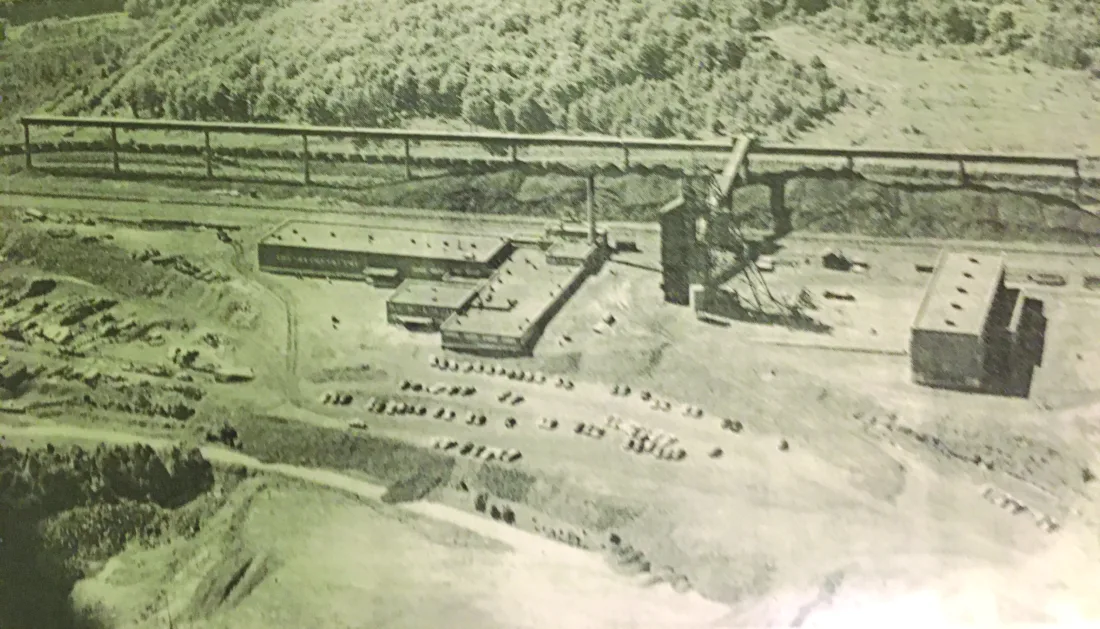
This is the Tracy Mine, owned by the Jones and Laughlin Steel Corporation in Negaunee. (Photo courtesy Virginia Paulson)
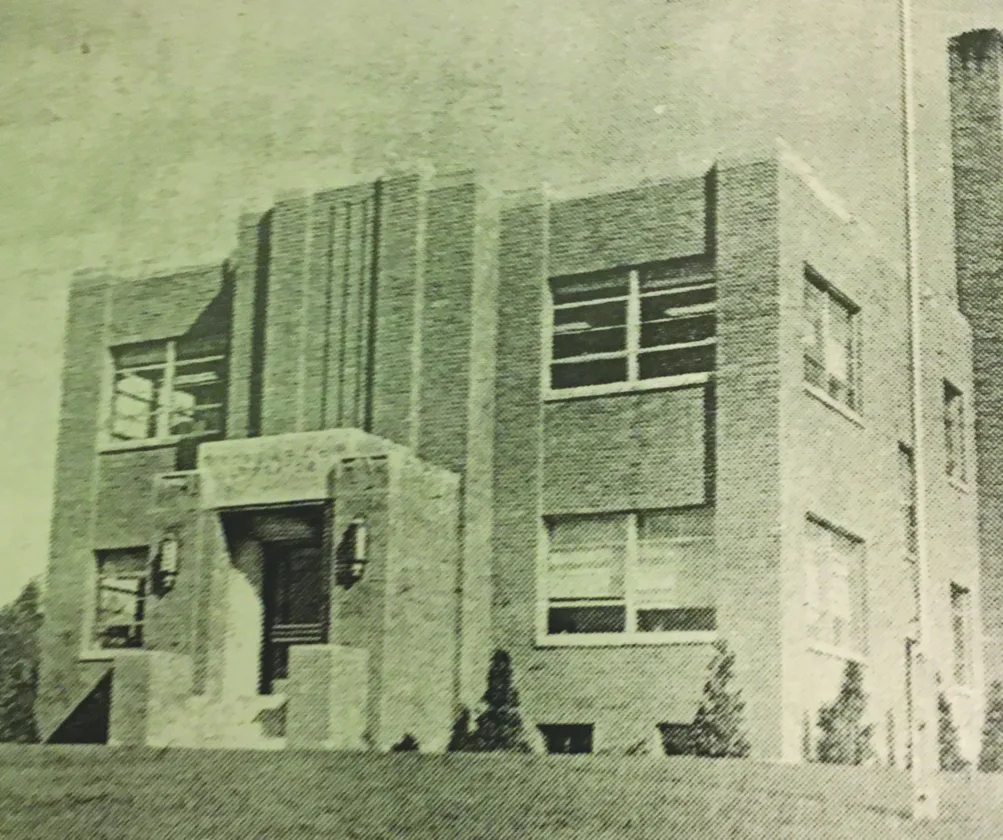
This is the Jones and Laughlin Steel Corporation research lab in Negaunee. (Photo courtesy Virginia Paulson)
This is the Tracy Mine, owned by the Jones and Laughlin Steel Corporation in Negaunee. (Photo courtesy Virginia Paulson)
This is the Jones and Laughlin Steel Corporation research lab in Negaunee. (Photo courtesy Virginia Paulson)
Trending
In 1865, the Jones and Laughlin Steel Corporation began mining activity on the Marquette Iron Range. It was that year when J&L became the agent for the Pittsburgh & Lake Angeline Iron Company, which operated the famous Lake Angeline Mine south of Ishpeming.
In the years to follow, J&L operated a number of mines in northern Michigan. For over 70 years, Jones and Laughlin's mining activities were supervised out of the Jenks Block building in Ishpeming. In fact, until about 1914, all of J&L's ore interests, both in Minnesota and Michigan, were headquartered at this Ishpeming office.
In 1892, J&L opened the Jackpot Mine on the Gogebic Iron Range. From 1904-19, it also operated the Rolling Mill Mine, located south of Negaunee.
It was during these early years that the direct shipping of open pit ores from Minnesota gradually predominated over underground ores because of their abundance and lower mining costs.
With the depletion of readily available ores around World War ll, J&L again became interested in underground mines, including opening the Tracy Mine in Negaunee in 1950. When the shaft was sunk, it meant jobs for lots of men. The mine was exempt from taxes for 10 years, or until the mine started to produce iron ore.
Jones and Laughlin was the sole owner of the Tracy Mine, while it also had interests in the steel rope division, coal mines and an interest in the Cleveland Cliffs Iron Company.
The period from 1955-60 brought some hard times. Miners from CCI and J&L went on strike with all the steelworkers. CCI laid off quite a few workers when the strike was over. J&L hired a lot of these workers and employment at the Tracy peaked at 435. Even if the ore was not of the highest grade on the range, the Tracy was one of a few companies that ran in the black for the next 11 years.
The main office shut down in 1971. At the time the mine had sunk the shaft down two more levels to a depth of 2,800 feet at a tremendous cost and never to be mined. Losing their jobs were 165 men, while the city of Negaunee lost $644,000.
Men found jobs at other J&L properties in Hibbing, Minnesota, some transferred to mines in West Virginia and some went to work for CCI. In 1972, the mine was dismantled by Mesaba Service and Supply, using mostly unemployed Tracy men for the work.
The Tracy Mine operated for 20 years. The planned capacity of operations was never reached because the blast furnaces would only accept certain sizes of ore, along with the recent developments of pellets. Planned goals were a million tons per year with 650 men. Peak year production was 400,000 tons with 435 men.
In its two decades of operation, the Tracy had two fatalities.
I personally don't know the names of these men, but my brother was involved in one of the accidents. He was trying to pull his partner away from a falling beam but the beam hit his partner, causing his death. My brother was badly hurt and never went back to work at the mine. My brother had reported the damaged beam and it was at the end of the shift and he was told it would be repaired during the next shift.
Negaunee was also the site of the J&L Ore Research Laboratory, where J&L centralized all of its ore research activities that produced important advancements in the technology of ore production. The ore research activity began in Negaunee in 1946 with the building of the research laboratory.
Roland Juchemich was employed at the Tracy and spent a lot of time compiling picture albums from the Tracy mine that are available for viewing at the Negaunee Historical Museum.
This is a quote from Juchemich in the book:
"The miners years ago lived close to the mine, most of them worked together and lived near each other. The Tracy miners were not neighbors, some lived in Houghton, L'Anse, Baraga and Michigamme to the west, and others came from Chatham, Munising and Trenary. We were not neighbors but we acted like neighbors."
Virginia Paulson has been a trustee with the Negaunee Historical Society for more than two decades, previously having been on the Negaunee Public Schools board of education for 23 years and MARESA board for 17 years.