
Birds continue to adapt to winter conditions
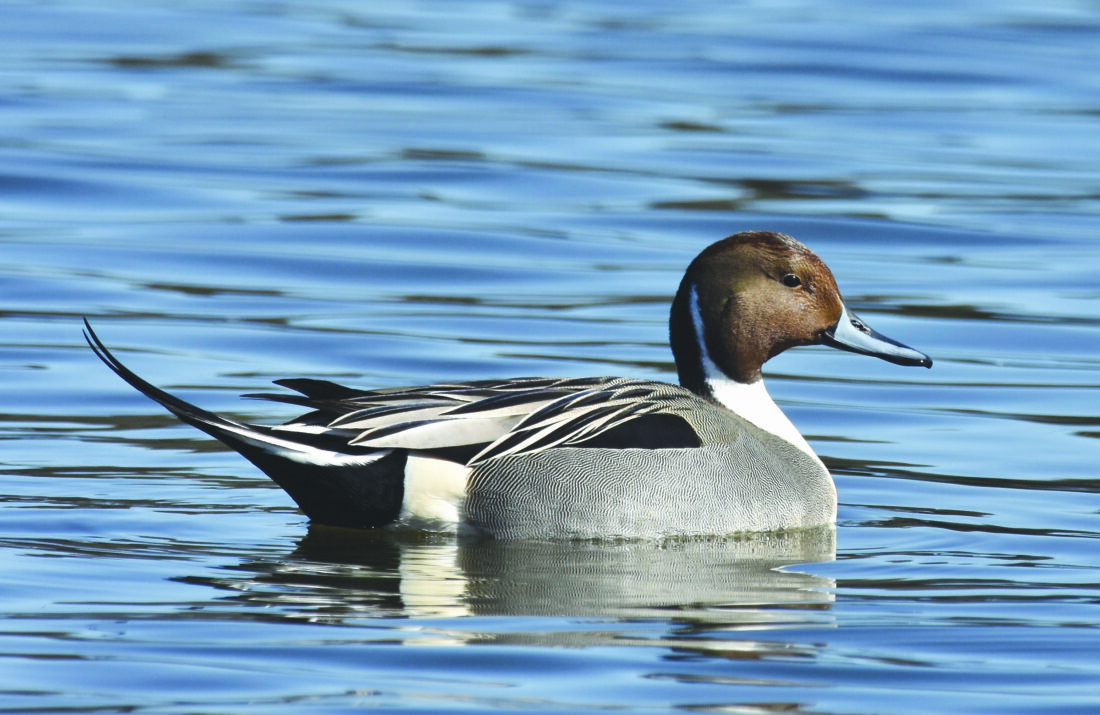
A northern pintail duck looks serene while swimming. (Photo courtesy Scot Stewart)
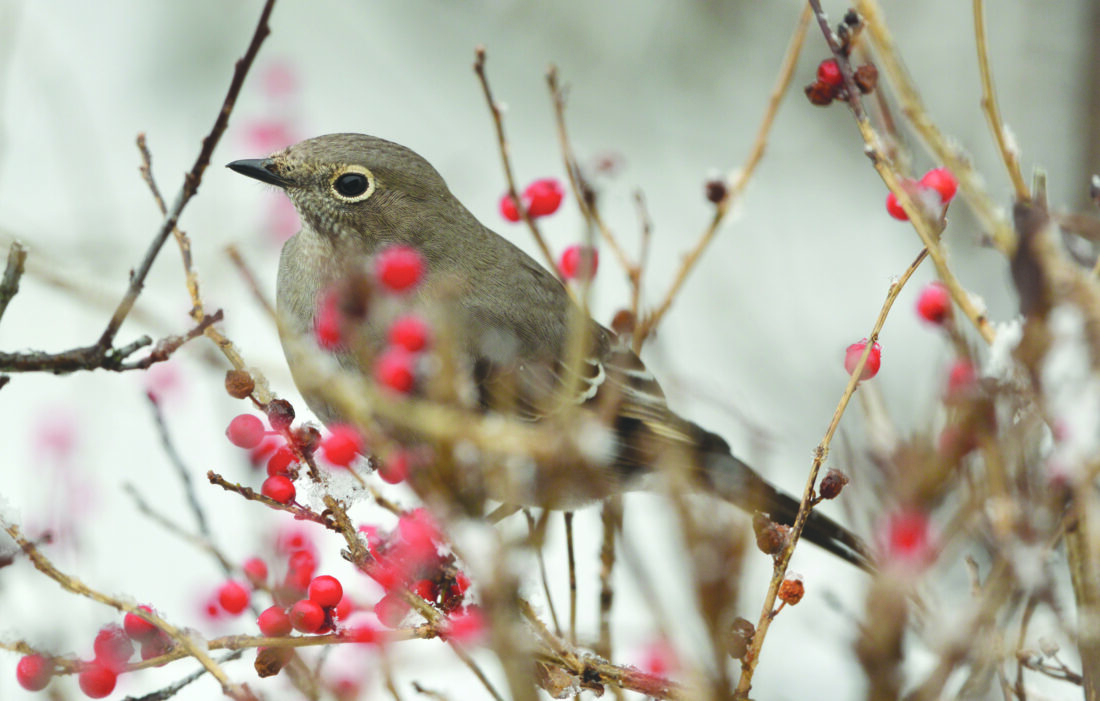
An American robin perches among berries still available during this winter season. (Photo courtesy Scot Stewart)
A northern pintail duck looks serene while swimming. (Photo courtesy Scot Stewart)
An American robin perches among berries still available during this winter season. (Photo courtesy Scot Stewart)
Trending
By SCOT STEWART
Birding enthusiast
"I could feel the winter shaking my bones and banging my teeth together." -- Sylvia Plath
That really summed up the ending of Tuesday evening and most of Wednesday -- as it has several other recent storms. Winter has become a truly challenging force in the Upper Peninsula now for nearly two months with plenty of snow, seesawing temperatures and extremely high velocity winds. Humans, trees and birds alike have all seen these as conditions to be reckoned with their severity and frequency.
Cardinals continue to be a delightful necessary flash of color so welcome during these dark, short winter days.
For those familiar with the roles cardinals play in the Lower Peninsula, Wisconsin, Illinois and other locations to the south, they have occasional experiences with groups of cardinals appearing together in groups or even small flocks in shrubs and around birdfeeders.
In the Upper Peninsula, pairs are the most common sightings. The east side of Marquette is one of the better places to find more, sometimes three different males can be heard singing in different directions simultaneously.
This past Tuesday, though, a birder got a different look. Seven cardinals, six males and a female were spotted near the Williams Park tennis courts on Ohio Street in Marquette. Following reports from several birders last summer of observations suggesting cardinal pairs that double clutched -- produced two different clutches of broods, it appeared it was a good year for cardinal production in town.
That congregation of "red birds" is nearly unheard of in the U.P. as they are still getting established here at the northern edge of their range. Because they are mostly seed eaters and frequently forage on the ground, cardinals do have a really difficult time surviving winter months away from area bird feeders that feature black-oil sunflower seeds, so most sightings come from residential areas. This report will definitely add excitement to the future of cardinals in Marquette and other U.P. towns.
In the same neighborhood where the cardinals were seen, a flock of 15 robins was also observed. Over the years, as most winters in the U.P. seem to have gotten a bit milder, a number of robins have managed to get by, especially in Marquette, surviving on a variety of tree fruits -- crab apples, mountain ash fruits, and later in winter, larger apples, after they have gone through a few freeze-thaw cycles. A smaller group of around six had also been observed early this month on the east side, too.
A least one snowy owl has been continuing to make regular appearances in Marquette recently. Snowy owls making their way southward in late fall and winter from the tundra are often unaccustomed to the harassment of crows and blue jays. After spending a short time in the U.P., they may turn to daytime roosts on breakwalls or other more remote places like Picnic Rocks, out of the view of their tormentors, and turn to hunting from more exposed positions at dusk and through the nighttime hours. Picnic Rocks has been a decent spot to look for snowies between 4:30 and 5:30 p.m. where one has been standing out sitting at dusk atop different islets.
Crow calls are often a great cue to finding not only owls -- great horned, barred and snowy owls, but also bald eagles and hawks. A group was recently heard in their more strained cawing on Marquette's east side last Monday though, revealing no owls, hawks or eagles. Their alarm calls were to announce the presence of a red fox briskly trotting to cover and going between several homes during the mid-morning hours.
Finches have found some solutions to the challenging weather conditions and shrinking natural sources of food by heading to birdfeeders in ever increasing numbers, at least in Marquette.
What has been a bit difficult to explain, though, has been the distribution of different species across town. At one east side residence, the majority of finches have been pine siskins with more than 40 coming to a feeding station, along with five American goldfinches. At another just seven or eight blocks away, only five or six siskins have been joining close to 70 or 80 goldfinches.
Mallards, northern pintails and American black ducks are also adapting to the changes in snow depths, ice coverage and wind conditions, packing into a few sheltered areas on Lake Superior, like at the end of Hampton Street in Marquette and on the Dead and Chocolay rivers and Whetstone Brook.
More than 300 mallards may be found together along the Dead River at any one time. On the Chocolay, it is more difficult to get an accurate count because some of the places where they stop to feed are more spread out. On the Whetstone, there is at least one spot where over a hundred mallards stop and may include northern pintails currently in the area.
Wild trumpeter swans were absent in Michigan from late 1800s until the 1990s, when they were reintroduced in the U.P. at the Seney National Wildlife Refuge. In all, 44 two-year-old swans were released in the refuge over a three-year period. Since then, they have done well, increasing to a yearly average of over 200 in some years. With the increasing population, the swans have begun disbursing to other wetland areas in the U.P.
During the winter months, the swans are forced from some territories due to ice cover to areas of open water on the Manistique and Dead rivers, and to other areas remaining open due to spring-fed waters. Trout Lake in Alger County is becoming a prime wintering spot for them, with 72 found there this past week.
Adaptation at its best for those chattering souls!
Scot Stewart is a Marquette-based birding enthusiast.