
Christmas bird count time: Marquette, AuTrain counts reveal common, unusual species for area

Scot Stewart
-

- Scot Stewart
-
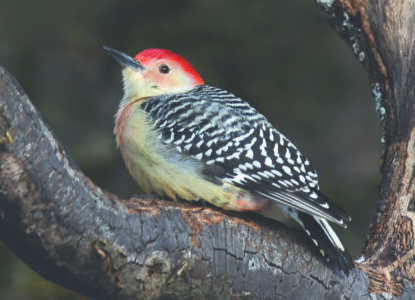
- This is a red-bellied woodpecker. (Photo courtesy Scot Stewart)
-
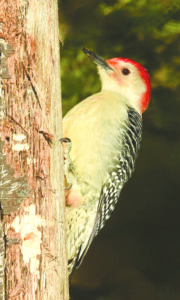
- This is a red-bellied woodpecker. (Photo courtesy Scot Stewart)
By SCOT STEWART
Marquette birding enthusiast
It is finally official. Winter is here. New snow is expected. The days are growing longer again. Ironically temperatures are mild, there are no blizzards waiting to pounce. It is just winter.
Many of the Audubon Christmas bird counts have been conducted, and the recent days’ weather played a big role in several. The AuTrain-Alger County CBC was on Dec. 14 — one of the coldest recent weekends. The total species for the day was 26, four below the 29-year average for the AuTrain count.
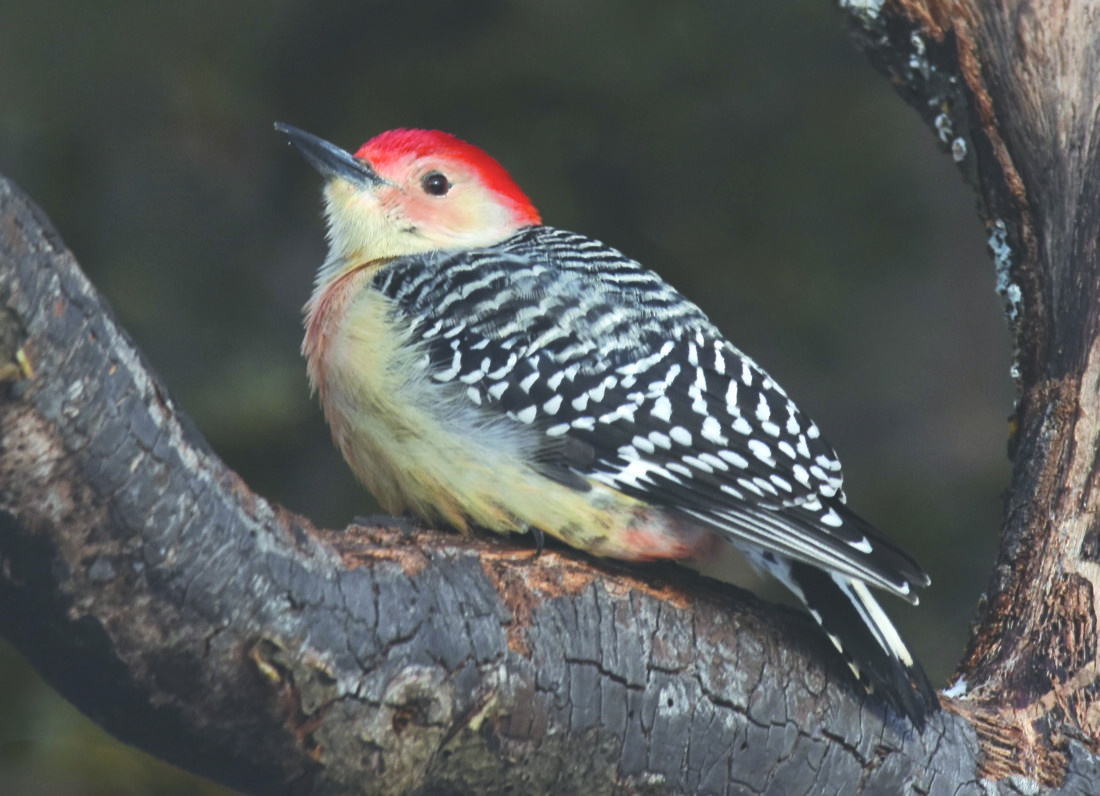
This is a red-bellied woodpecker. (Photo courtesy Scot Stewart)
Most of the species found were expected. The highlights were a northern shrike and a snowy owl seen flying over M-28. The owl was a first for that species in the AuTrain Count.
The Marquette CBC was last Saturday and netted 48 species in submitted submissions found by 12 field participants and several individuals conducting home feeder counts. Windy conditions during the predawn hours only allowed counters to locate only one owl and similar conditions again prevailed at dusk. One great horned owl was found in Trowbridge during the early morning hours, but no snowy owls were found.
Several species turned up in high numbers. Red-breasted nuthatches were found at several spots in sizable flocks. Mourning doves, once fairly rare in town, were found in several large flocks, one of 12 and another of 18.
Found mostly singly, red-bellied woodpeckers were found at a wide variety of places, mostly within the city limits. Twenty years ago, they weren’t even on the count.
The quartet of trumpeters seen irregularly in town this month made it back to the Lower Harbor in time for the count.
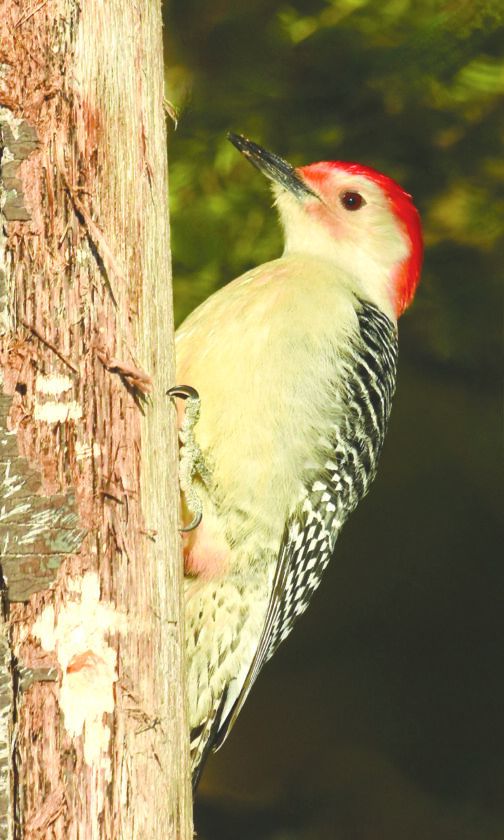
This is a red-bellied woodpecker. (Photo courtesy Scot Stewart)
In all 15 species of ducks, geese, and swans, plus a horned grebe made the count. Two more unusual ducks, a greater scaup and northern pintails were there. Significant amounts of ice have skimmed across most of the Lower Harbor since Saturday, so the timing for waterfowl was good.
Gulls were scarce on the Marquette CBC. There were plenty of herring gulls, but no other species appeared in the early returns from counters.
One new species did make it on for the waterbirds, seen over Lake Superior northwest of Presque Isle — a red-throated loon migrating south to the U.S. coastal areas of the Atlantic. Red-throated loons nest in Alaska and the northern Canadian territories and provinces. Western populations winter on the U.S. coastal areas of the Pacific.
Birders monitoring the Lake Superior waters north of Presque Isle have found some good numbers of waterbirds flying past during fall migration.
Hawks, falcons and eagles did not disappoint, either. Several Cooper’s hawks were found and continued to be found Sunday when an adult and a juvenile were seen hunting pigeons in the Lower Harbor.
There is no shortage of pigeons downtown currently. On Monday, 164 were counted flying, then roosting on power lines just off Washington Street.
A merlin was noted on the CBC. They have been seen frequently in recent weeks in the area.
Bald eagles turned up at several sites, too. Four were seen on Presque Isle, with a pair involved in an aerial display over a fantastic long tube cloud, known as an arcus cloud, over Lake Superior.
Wild turkeys were also present at several places. Six were seen on County Road 550 near the Middle Island Point Road. Twenty-two were counted at Presque Isle.
This is another species relatively new to the count. Thirty years ago, there were a few wild turkeys living in southern Delta County. Today they are found all across the southern Upper Peninsula and in many northern U.P. sites as well.
Many may be here as a result of releases of captive birds, able to adapt to milder winter conditions, shallower snow depths and more individuals having seed out for them and other birds.
Another interesting turkey relative, a northern bobwhite, has been visiting feeders at a residence in Skandia. This smallish quail has disappeared from much of its former range in the eastern U.S. and has always been quite rare in the U.P. This one has been feeding at the residence and finding shelter in a building at the farm.
In the past, they had shown up occasionally in south Marquette after being released by a kennel that used young birds to train hunting dogs. Law required birds still being held in the fall be released into the wild. Most usually survived only a few months as they lacked the ability to protect themselves from local predators.
At least two American robins were found on the Marquette count. They have become scarcer in the area with the colder conditions this fall, despite the relatively large amount of food available to them.
The Townsend’s solitaire found near McCarty’s Cove this month continued, feeding in yew bushes at a residence. Just a couple have made Marquette counts in the past.
Mountain ash and crabapple fruits have continued to provide for a scattering of pine grosbeaks, and some were located across town.
Larger flocks of bohemian waxwings have also been found in those trees, and they turned up at several locations in flocks up to about a hundred.
Two other unusual lingering birds, a common grackle and a red-winged blackbird, were found on the east side of Marquette the day before the CBC but were not relocated on count day. The results of several recent counts should be released soon, and several are yet to be held. The counts show it is still a great time to bird.