
Cool runnings
Running company gives winter running tips
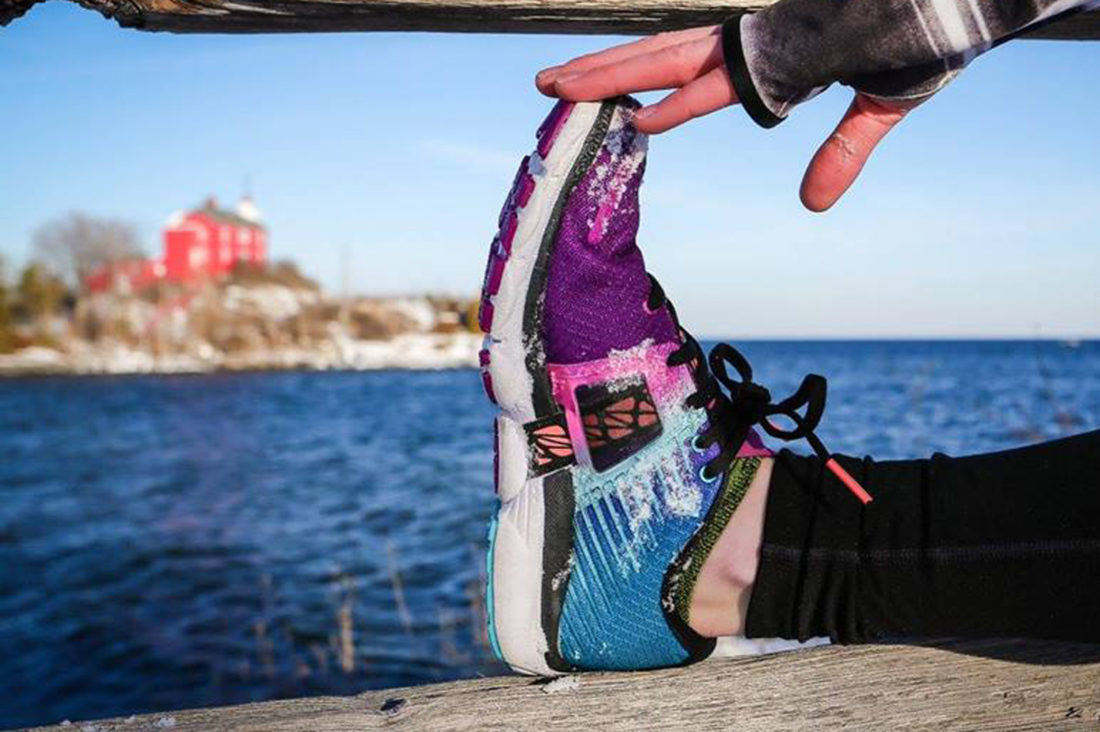
A jogger takes a moment to stretch with the Marquette Lighthouse visible in the background. (Queen City Running photo courtesy of Cory Genovese)
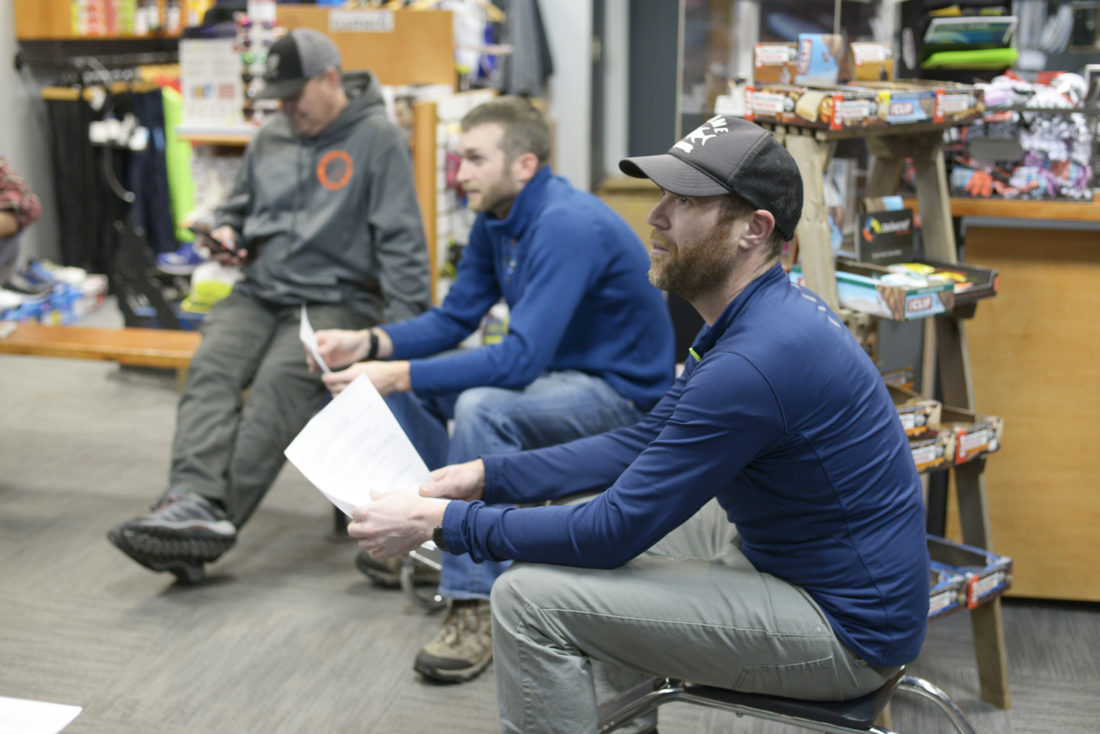
Kevin Thomsen, owner-operator of Queen City Running Co., shares advice with attendees at a recent winter running forum in his downtown Marquette store. (Journal photo by Corey Kelly)
A jogger takes a moment to stretch with the Marquette Lighthouse visible in the background. (Queen City Running photo courtesy of Cory Genovese)
Kevin Thomsen, owner-operator of Queen City Running Co., shares advice with attendees at a recent winter running forum in his downtown Marquette store. (Journal photo by Corey Kelly)
Trending
MARQUETTE-- Winters in the Upper Peninsula can feel limiting, with snowy sidewalks, icy roadways and Arctic temperatures, and getting outside can be unappealing. However, many runners in the community are proving otherwise. Recently the Queen City Running Co. hosted a winter running forum at its store in downtown Marquette to encourage more people to hit the snow-covered pavement.
"It's a blast if you get used to it and if you dress the right way. It's a lot of fun. You kind of get that feeling of being a kid when you didn't want to come in (from the outside)," said Kevin Thomsen, owner-operator of the store.
During the forum, Thomsen discussed setting workout goals, planning for the upcoming racing season, locating winter running trails and adapting to weather conditions.
"It's easy to make excuses when it's dark and when it's cold, and you get home at 5 (p.m) and it's pitch black out, but it feels really good," Thomsen asserted.
Between the multi-use path, the Superior Dome and the Noquemanon Trail Network single-track trails, Thomsen estimates there are about 60 miles of pathways in the city of Marquette and Marquette Township that provide year-round access for runners, without having to compete with a motor vehicle or be on a treadmill.
"We have so many miles available to run and not a lot of communities around the country have that," Thomsen said.
Runners should dress similarly to nordic skiers, or in cloths that are suitable for weather about 15 degrees less than the current conditions suggest. Thomsen explained that your body will warm up after about 10 minutes of exercise. However, he warned that runners should cover exposed skin to avoid frostbite.
"When your body is telling you that you are warm but you're running against a 30-degree wind, and the wind temp is negative 20, you can easily get frostbite," Thomsen warned. "So, you want wind protection, insulation and you want stuff that will wick and get moisture off of you quickly."
Due to the colder temperatures and icy terrain, runners should maintain a slower pace than they would during other seasons. Thomsen said it takes about three or four runs before your body gets acclimated to the cold air conditions.
"You're going to run a little slower, but you will still get the same type of workout as in the summertime -- just 'cause your body is working harder," Thomsen said. "You're going to be sore the first week because you are tenser. Your body is working a little harder to stay on the ground."
Thomsen suggests using the same running shoe all year-round, but athletes should consider purchasing specialty winter running shoes for longer marathon-type distance runs. Winter running shoes are waterproof, have a better grip for icy conditions and are wider to create more stability. Runners should wear a headlamp at night and dress in reflective gear to see and remain visible on the trail. Thomsen asserted that carrying water is essential for longer distances. Even though it is cold outside athletes can still experience dehydration. During lengthy outings, Thomsen suggests using hand warmers to keep your water from freezing.
Trail etiquette was also discussed at length during the forum. It's a common courtesy to avoid running or walking on groomed trails that are covered in unpacked snow. If runners see that they are creating deep indents known as "postholes," Thomsen advises that they turn around to avoid further damaging the trail. He described ideal trail conditions as feeling "like a sidewalk." He explained that in the winter, roots and rocks that would otherwise be exposed are covered, making running in the woods easier and more enjoyable than it would be in the summer.
"If you can get out, it's a lot of fun. It's my favorite time to get out actually," Thomsen said. "It's just beautiful out there; there is something about it."
Visit the Queen City Running Co. for Marquette city maps and information on running trails. Follow their Facebook page for group running opportunities and other related events. The store is located at 119 W. Baraga Ave., Marquette.