
Big switch: BLP mulls future Shiras closure
Trending
MARQUETTE -- The Marquette Board of Light and Power has, in one fell $65 million swoop, gone from losing firm power from the grid and skirting a crisis, to now having more generating capacity than it's ever likely to need.
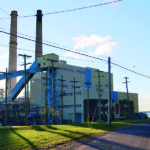
Developments in understanding the BLP's power supply are showing the Shiras coal-fired steam plant may no longer be a cost-effective generating asset in the long term, BLP officials are saying.
Acting Executive Director Tom Carpenter gave a presentation to the BLP Board of Directors Tuesday afternoon on the utility's power supply plan, offering an updated overview of generation and planning, and clarifying some possible misconceptions, he said.
Carpenter said the biggest question he gets asked is "What changed?" The BLP is now able to use energy from the grid, when two to three years ago, that wasn't possible, he said. So what changed?
"We changed, by putting this in," Carpenter said, referring to the new Marquette Energy Center and its three natural gas-fueled generating engines, which can turn off and on in five minutes.
Before the MEC, the Shiras unit 3 was a must-run generating asset.
"We had a single point of failure, and then we relied on the grid," Carpenter explained.
Back in the winters of 2012 and 2013, Carpenter said the BLP came close to a crisis, and that's what started the conversation about contingencies and building the MEC.
"I was down here at Shiras when we got some of these calls. We had Shiras 3 offline for maintenance, … relying on the grid to supply all of our power," Carpenter said. "Then they called and said, 'We need to cut you off because we don't have enough.' That was the big driver for (the MEC), because we went to start (the plant 4 substation), and it didn't start. We went to start it again, and it didn't start. And we were five minutes from cutting the whole town off, black."
The BLP's fuel oil fired combustion turbine at the plant 4 substation is nearly 40 years old and used only during emergencies, according to the BLP's website.
"Now back in 2014, they told us we couldn't have firm transmission (from the grid), so we decided that we weren't comfortable relying on the grid in case there was a failure with (Shiras) unit 3," Carpenter said. "So we put the MEC in. Now probably the most important thing that people need to understand is that our world flipped 180 (degrees) when we put the MEC in."
The most important difference between the three units at the MEC and Shiras 3 is how quickly they can start, he said. Shiras takes more than 12 hours to warm up, meaning the grid was only being used as a contingency when Shiras went offline.
But now, since the MEC engines can start in five minutes, that power is available whenever the price point is right -- meaning whenever it costs less than running the MEC.
"Today if we ride on the grid, which we've been doing for almost a month now at night … and all weekend long, if we have a failure of that source of power, we can bounce right to the MEC in five minutes," Carpenter said.
As it stands now, the BLP itself can generate a total of 124 megawatts of electricity -- much more than the BLP's peak load of 68 MW in 2007, and the average hourly load of 39 MW.
Each of the three engines at the MEC can generate 17 MW; the plant 4 substation combustion turbine can generate 25 MW; Shiras 3 can generate 44 MW; and renewable energy contributes 4 MW.
With the Midcontinent Independent System Operator -- the grid -- the BLP can obtain up to 93 MW.
With the MISO grid and the BLP's independent generating assets, the BLP has a total generating capacity of 217 MW. That's more than five times the average hourly load, and more than three times the peak load of 68 MW in 2007. Meanwhile, peak and average loads are shrinking steadily every year.
The concept of whether or not the BLP can trust the grid doesn't matter anymore, Carpenter said, because "We're covered. … We have choices."
"I sleep really good at night," Carpenter said.
A recent in-depth study by engineering firm Burns and McDonnell has given a much clearer picture of costs and benefits of different scenarios heading into the future.
The cost of running the different assets varies, with Shiras costing $55 per hour, the MEC costing about $35 and the grid about $32, Carpenter said.
With the amount of capacity available, it's becoming clear that operating Shiras will -- in the long-term -- be more costly than beneficial.
The power supply study made that clear, with preliminary numbers showing the utility could save $3 million per year by not running Shiras, BLP officials have said.
With these developments, electric rates are due to stabilize into the future, Carpenter said.
Also important to note is that in the month that the MEC has been online, the utility is saving significantly more money than anticipated by being able to switch back and forth to the grid, Carpenter said. And the utility could get access to firm power back as soon as 2019, due to routine improvements to the MISO grid, he said.
Jenn Hill, an independent energy consultant, said the presentation raised interesting questions about how the BLP planned for generation and how to plan for management in the future.
"This is really important information, and I think it's going to be incredibly valuable and going forward," Hill said.
John Prince, owner of JP Electric and candidate running for the BLP board in November, said he understands the angst in the community about shutting down Shiras, but that the BLP needs to be actively mobile in looking to the future, and not rest on old plans.
"Probably the best thing that ever happened to this community was when we lost firm, because we'd still be milking and babying along at 35, 40 year old equipment and that gets very costly," Prince said. "So that's a good thing."
Mary Wardell can be reached at 906-228-2500, ext. 248. Her email address is mwardell@miningjournal.net.